
Support our Pesach 2026 Appeal by clicking here

Activities and engagement

Eating and drinking

Future care planning

Hearing

Medication management

Mobility

Oral care

Phone accessibility

Sleep

Covert medication

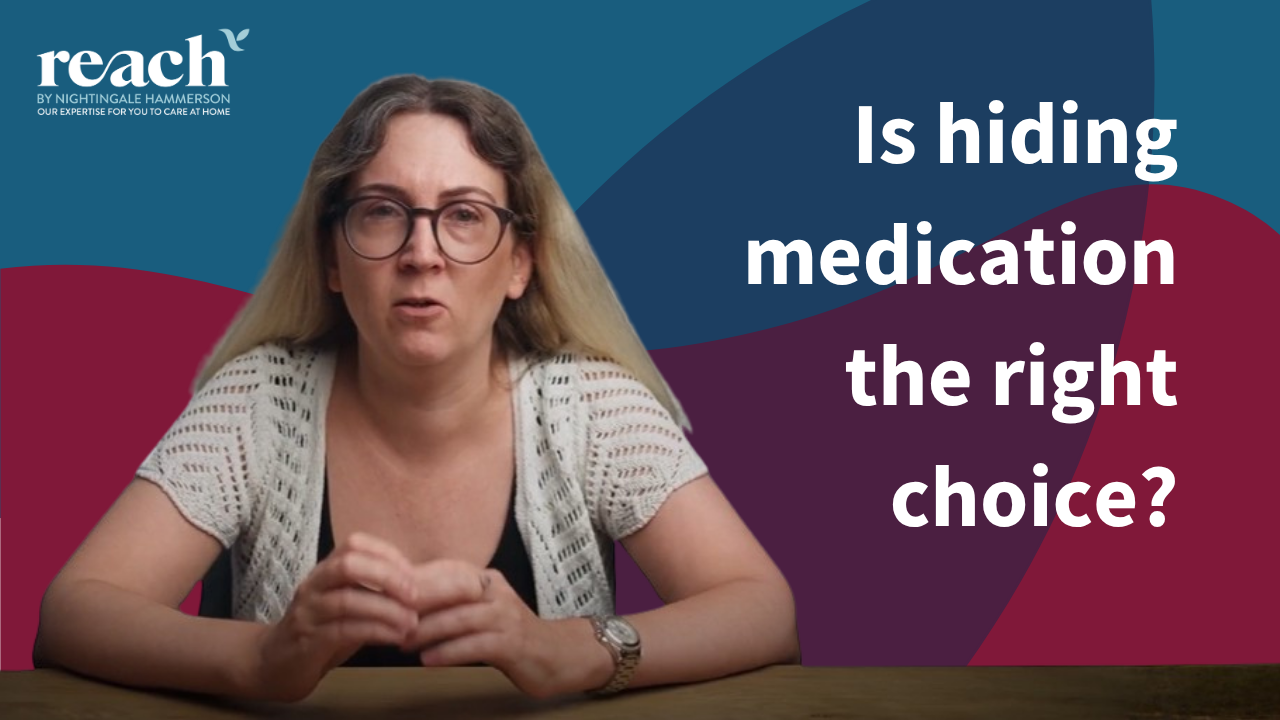
This video explains that covert medication (hiding medicine in food or drink without a person’s knowledge), should only be used as a last resort after trying alternatives. It requires a capacity assessment, professional guidance, and safe administration to ensure effectiveness while respecting the person’s rights and wellbeing.

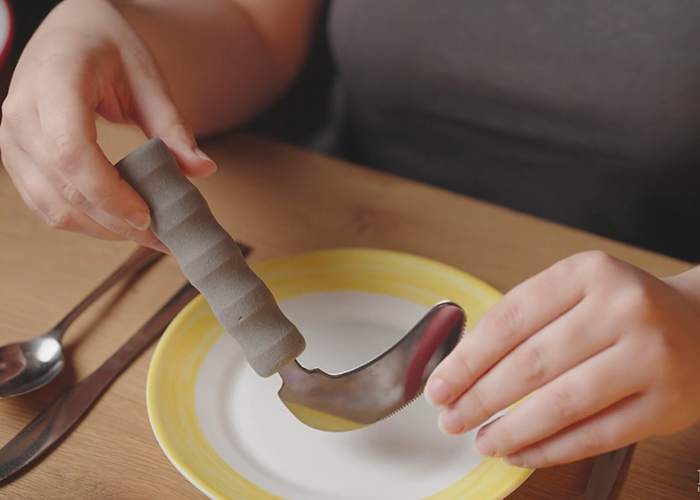
Have a look at this video for practical tools to make taking medication easier.

"Covert" means not openly acknowledged. In healthcare, it refers to hiding medication in food or drink so the person is unaware they have taken it. This removes a person’s right to choose so it should only be used as a last resort.  

-----------------------------------

BEFORE CONSIDERING COVERT MEDICATION 

Try all alternative approaches first

  • Reduce medication to essentials only.  
  • Adjust timing to suit the person.
  • Change the preparation. Try smaller tablets or different flavours, if possible.
  • Have a different person administer it.
  • Consider the person’s prior wishes, such as advance directive or living will.  

Capacity and legal considerations

If all alternatives fail: 

  • A capacity assessment is required by a GP or qualified assessor. It must be specific to the decision about taking medication.
  • If the person has capacity, covert medication cannot be used, even if their decision is unwise.

If the person is assessed as lacking capacity

  • A best interest meeting should be arranged with the individual’s GP or treating clinician. Participants may include social workers, independent advocates and relevant individuals with lasting power of attorney for health and welfare.
  • In this meeting, it should be determined which medications, if any, will be administered covertly.
  • A review date to reassess the decision should be agreed.
  • A documented plan for how the medications will be given should be given.
  • Only essential or life-preserving medications should be considered for covert administration.
  • Even if due to swallowing difficulties, hiding medication is still covert.
  • The same legal and ethical processes must be followed as the person is unaware they are receiving medication.

Safe preparation and administration

  • Healthcare profession (pharmacist or GP) should advise on how to administer the medication safely.
  • This may involve switching to liquid, dispersable or more suitable alternatives. 
  • It also involves arranging clear labelling from the dispensing pharmacy with administration instructions.

Important safety warnings

  • Do not crush tablets or open capsules unless instructed to do so. 
  • Slow-release tablets may deliver too much at once if crushed, which can be dangerous.
  • Some medications can also irritate the mouth or throat when not swallowed whole.
  • Certain drugs, such as finasteride, can be a risk for the person administering them, if handled incorrectly.
  • Crushed medication can often taste extremely bitter.

Offering medication first

  • Always offer medication openly first, even if covert administration is approved, to respect the person’s autonomy and save time. 
  • If the person refuses, then proceed with the agreed covert method.

Mixing and serving medication

  • Ideally, use cold or room temperature liquids.
  • Lukewarm drinks are acceptable if the person only drinks tea or coffee.
  • Do not mix multiple medications together. Prepare each one separately.
  • If many medications are needed, stagger their timings where possible.
  • If timing is restricted, mix each doses into the smallest amount of food or drink to ensure it’s consumed fully.
  • Choose soft food that the person likes, such as yogurt or mashed potatoes.
  • Never leave medicated food or drink unattended. If food is unfinished, you cannot be sure how much of the medication was taken.

Risks of covert administration

  • The person may notice changes in taste or texture, which can lead to refusal of the food or drink. 
  • If this happens, contact the GP for a review. Covert administration should only continue if it remains safe and effective.


We encourage you to seek advice from a GP, pharmacist or another healthcare professional if you have any concerns or questions. 

Meet our experts

Nicola Perkins


Was this useful? Please let us know

The resources available are not, and are not intended to be, medical advice, which should be tailored to your individual circumstances.  The resources are for your information only, and we advise that you exercise your own judgment before deciding to use the information provided. Professional medical advice should be obtained before taking action. Full terms and conditions