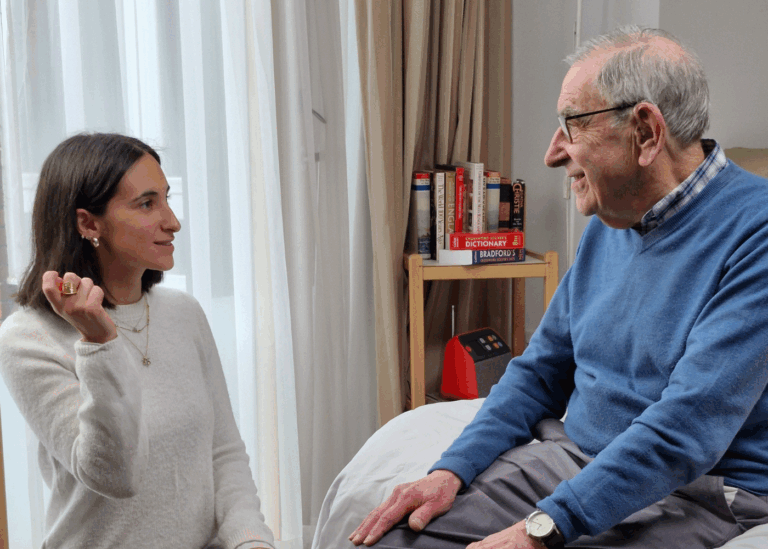
In this video, we introduce the calming power of hand massage, a gentle activity that can help anyone relax, including those living with dementia. It promotes a sense of connection and offers comfort, benefiting both you and the person you are caring for.
Create a soothing atmosphere: Begin by setting up a calming environment. Dim the lights, play soft music, and ensure the room is warm and inviting to help the person feel relaxed and comfortable.
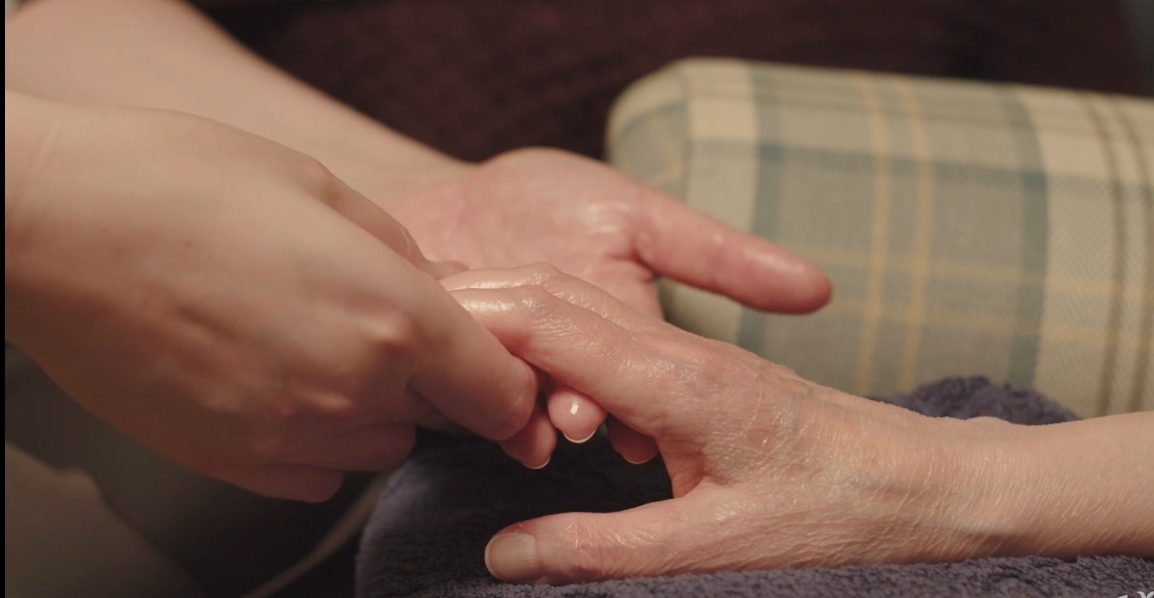
Use a clean towel or pillow for support: Place a soft towel or small pillow under their hand to keep it supported and reduce strain on their arm or wrist during the massage.
Choose appropriate products: Use a familiar or neutral cream or massage oil. Older skin tends to be thinner and more prone to allergic reactions. Always use a lubricant to prevent friction during the massage.
Begin slowly: Start by gently holding their hand to establish comfort and trust. Allow them to get used to your touch before proceeding with the massage.
Use gentle pressure: Apply light, even pressure to avoid discomfort or injury, as older skin is more fragile, and joints may be sensitive. Adjust the pressure based on their feedback.
Incorporate gentle stretches: If they are comfortable, include gentle stretches for the fingers and wrists to improve mobility and reduce stiffness.
Take note of medical conditions: Be mindful of conditions such as arthritis, neuropathy, or other hand-related issues. Avoid applying pressure on inflamed or sensitive areas.
Avoid broken or irritated skin: Check for any cuts, sores, or rashes, and avoid massaging these areas to prevent irritation or infection.
Encourage feedback and observe non-verbal cues: Periodically check in to ensure the pressure and techniques are comfortable, and respect their boundaries if they indicate discomfort. Additionally, pay attention to subtle non-verbal signs of discomfort, such as flinching or pulling back, and adjust your technique accordingly.
Consider aromatherapy: If they enjoy scents and do not have sensitivities, use lightly scented oils such as lavender to enhance relaxation. Always confirm they are comfortable with the fragrance.
Offer hydration: After the massage, encourage them to drink water to stay hydrated and improve circulation.
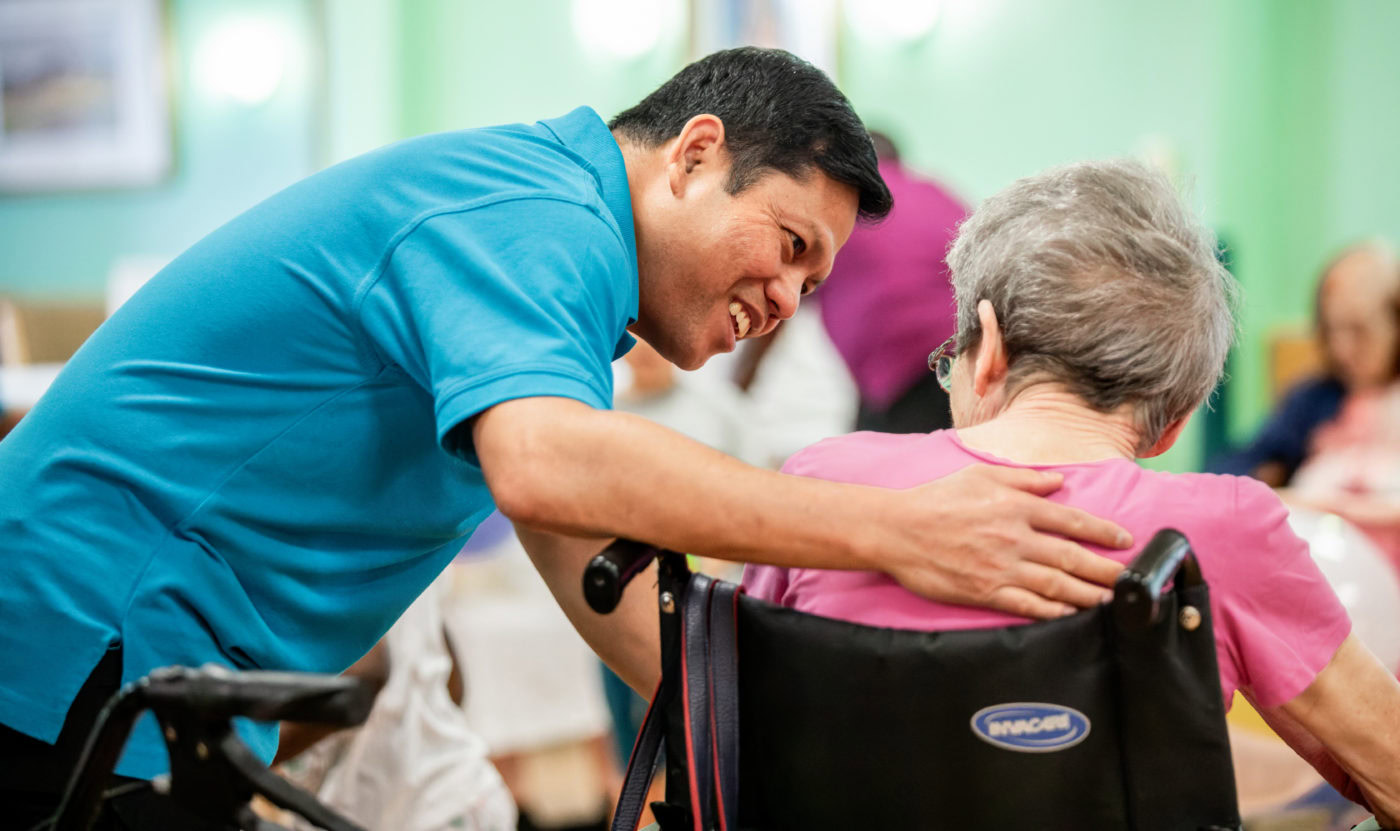
Make it a social connection: Use the massage as an opportunity for conversation or quiet companionship, depending on their preference.
The M Technique
This video demonstrates step-by-step directions for an established massage method called the M Technique.