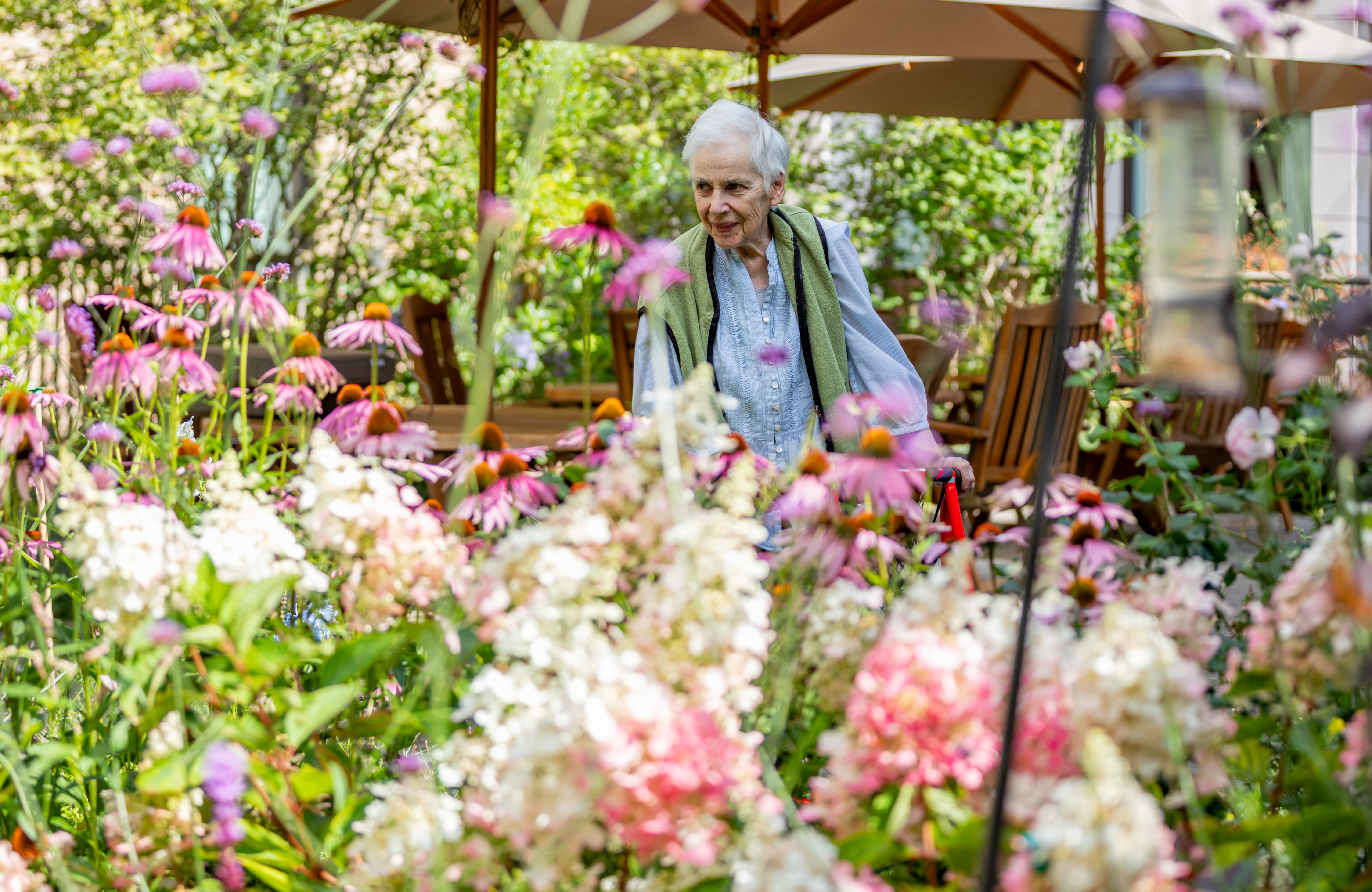

The woodland-themed garden at Hammerson House and the landscaped gardens of Nightingale House have long been beloved places of reflection and calm for the Residents of Nightingale Hammerson.
Chris Rowlands, Project Lead, has been responsible for creating gardening activities with Residents for many years at Hammerson House, working alongside colleagues and volunteers at both Nightingale House and Hammerson House. She is currently responsible for an ambitious Therapeutic Gardening Project. The aim is to transform the gardens into living spaces that actively support Residents’ well-being, independence and quality of life.
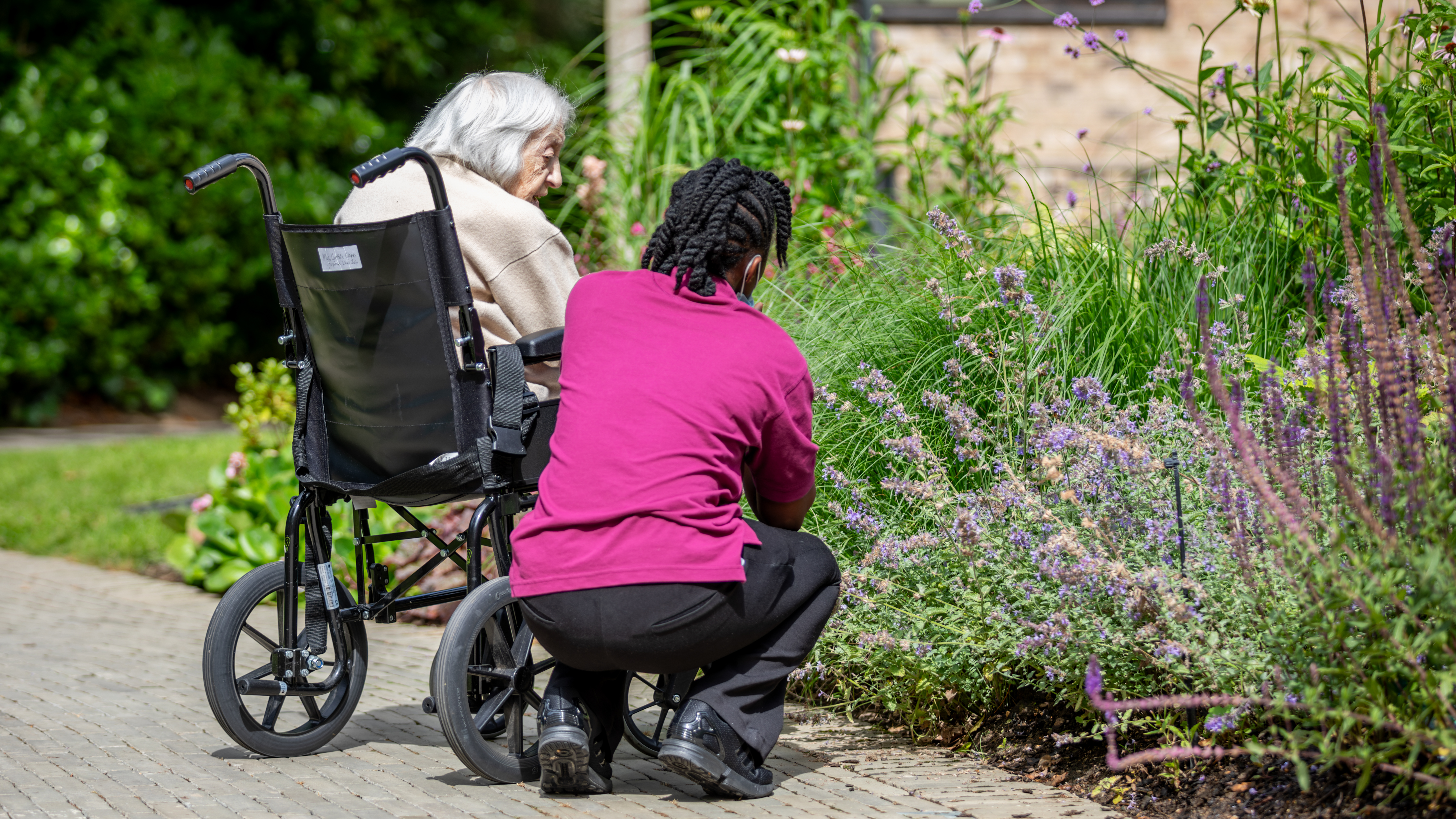
Access to nature is far more than a pleasant experience. Research consistently shows that spending time outdoors can improve both physical and mental health. For the Residents of Nightingale Hammerson, including those living with dementia, physical impairments or limited mobility, an innovative therapeutic gardening programme will improve mood, stimulate memory, encourage movement and create opportunities for meaningful social connection.
“Our gardens are beautiful, but we realise they could offer so much more,” Chris explains. “Through conversations with Residents, relatives and stakeholders, we discovered opportunities to create environments that are not only attractive but actively therapeutic, engaging and meaningful.”
Plans for the new vision include:
“Our aim is to make nature an integral part of everyday life,” adds Ed Davidson, Director of Operations. “By designing spaces that are accessible, engaging and meaningful, we can support well-being and create opportunities for Residents to maintain a sense of purpose and enjoyment, whatever their abilities.”
The benefits of spending time in nature are immeasurable to mental and physical health but not every Resident can easily venture outdoors. A key element of the programme is to strengthen the connection between indoor and outdoor living. The focus will be on helping many Residents, especially those with physical impairments or living with dementia, to enjoy nature from inside the home.
“We want all team members to think about helping Residents enjoy the outside from the inside,” Chris says. “Even a view of nature, birds visiting a feeder, or the sound of rain pattering on a roof can have a positive impact on well-being. Turning chairs to face the windows and opening the net curtains are simple and effective changes which are already making a difference.”
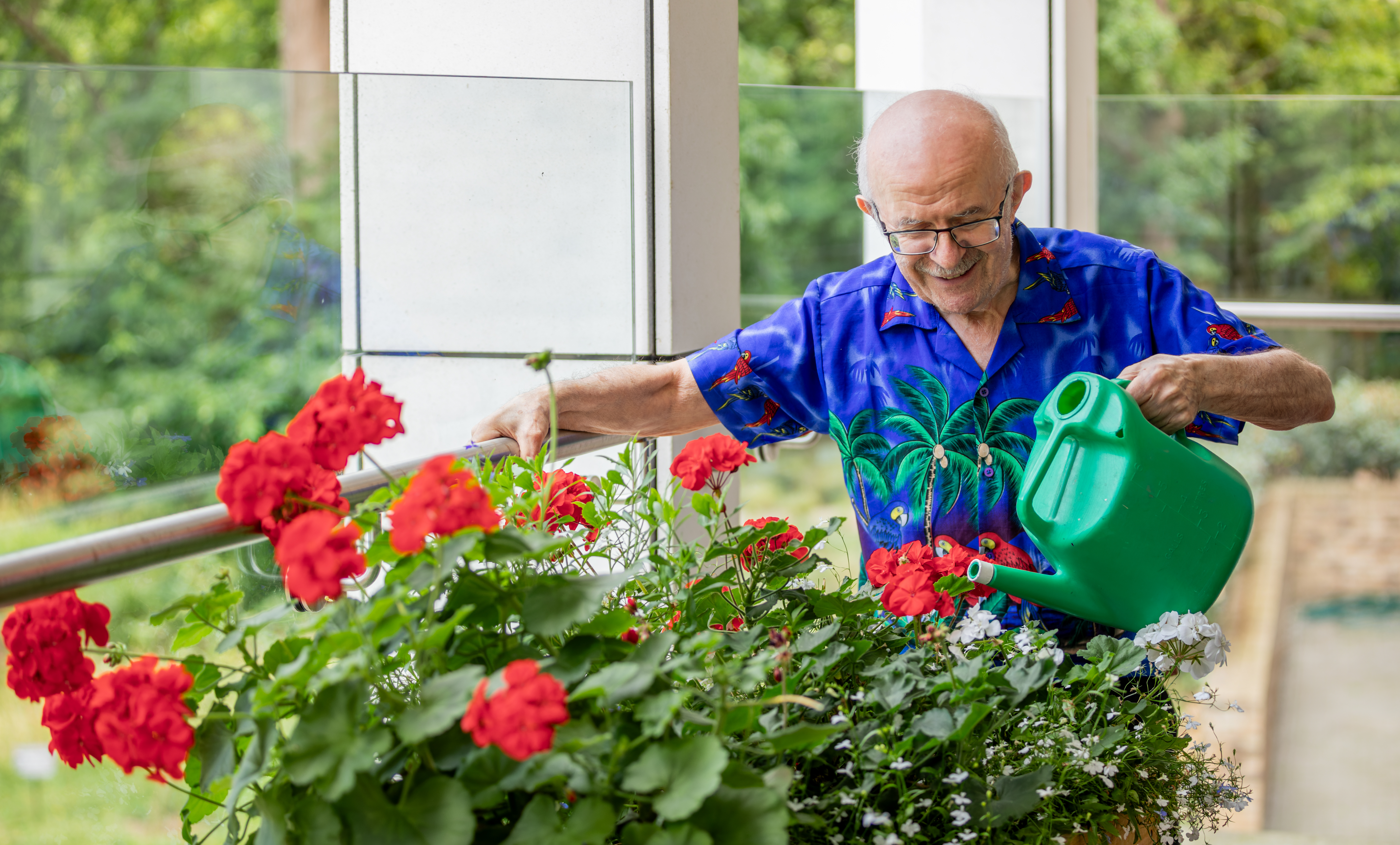
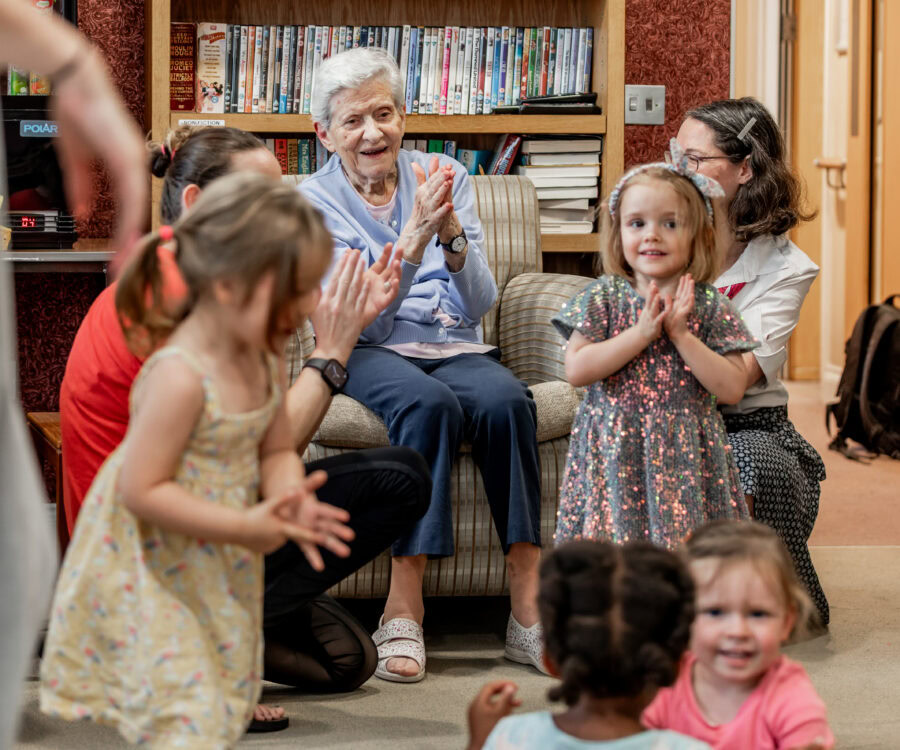
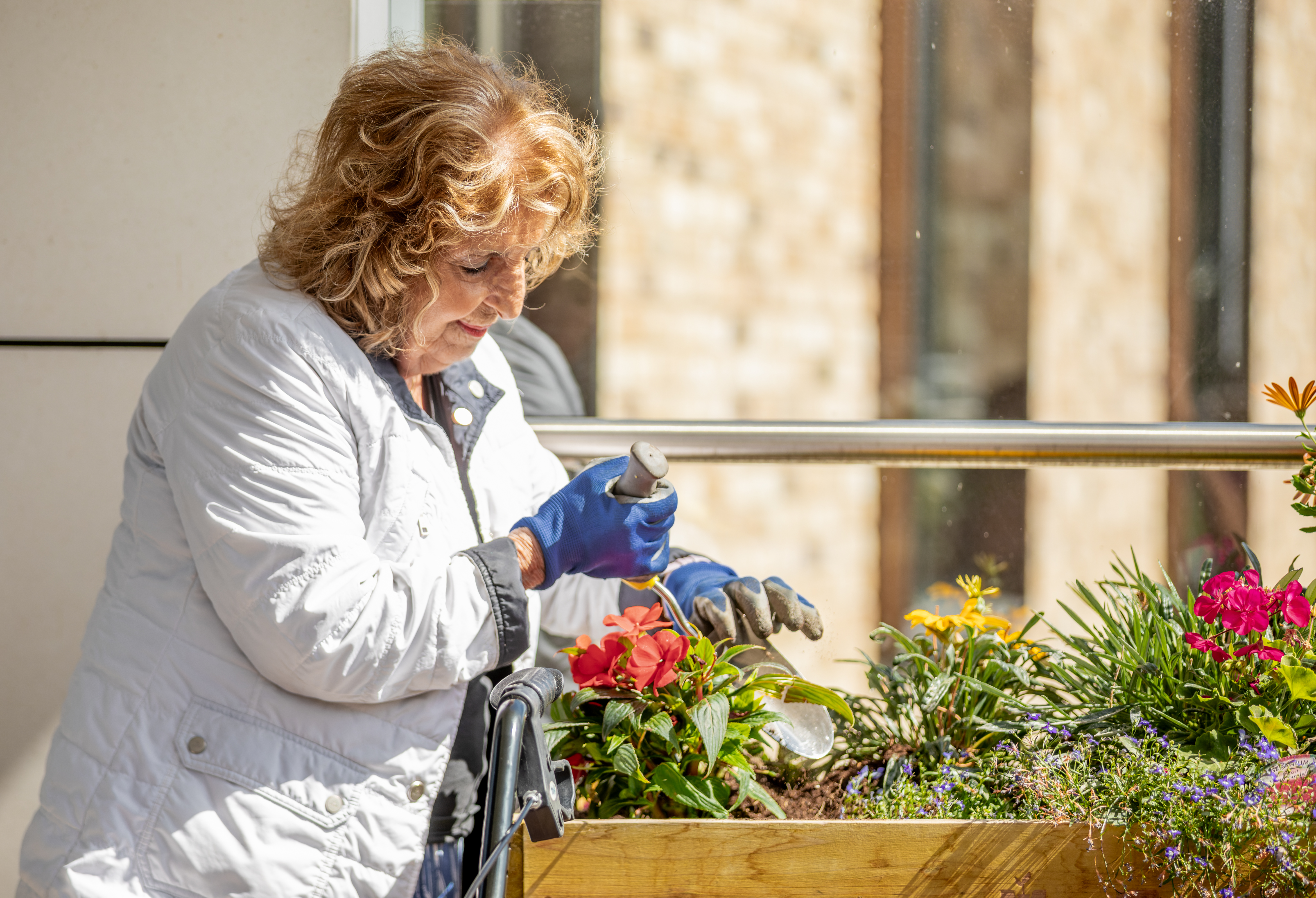
The Therapeutic Gardening Project goes beyond enjoying the garden. It encourages Residents to become active participants in its development. Residents are already involved in weekly gardening sessions where they plant tomatoes, sweet peas and seasonal flowers. Future plans include growing vegetables and flowers that can be used in flower-arranging sessions or sold at community events such as garden and Chanukah fairs. These activities create opportunities for decision-making, responsibility and purpose whilst simultaneously strengthening connections between Residents, families and volunteers.
One Resident shared her love of watching birds from her room. In response, Chris installed a bird feeder outside her window. She now keeps a record of the different species she observes and has become known affectionately as Hammerson House’s own ‘nature spotter’. Such moments demonstrate how personalised, nature-based interventions can create purpose, stimulate curiosity and bring daily enjoyment to Residents.
Nightingale Hammerson is working with Step Change Design, an award winning company that understands the important relationship between the physical spaces of our homes and our care culture.
“Understanding how an organisation currently relates to their existing outside space enables us to propose the most appropriate design support approach that will be cost effective, fully owned by care teams and users and based on currently identified needs aligned with person-centred practices. We call this approach Relationship-Centred Design.” Step Change Design
Together with an education programme for Engagement Leads, volunteers and care teams, Step Change Design will support the understanding of the therapeutic benefits of gardening and nature-based activities. By enhancing sensory experiences and creating opportunities for meaningful engagement, the programme aims to ensure that every Resident can benefit from the restorative power of nature.
As Chris reflects, “What started as a small project has grown into something that is truly special. This project means the world to me. I feel so privileged to be given the opportunity to develop the gardens in ways that are meaningful and beneficial and add a new dimension to the lives of Residents and families and our team members.”
The vision is simple: to create beautiful, accessible and therapeutic gardens within a care culture that values the outdoors, and to enrich the life of everyone in the Nightingale Hammerson community.